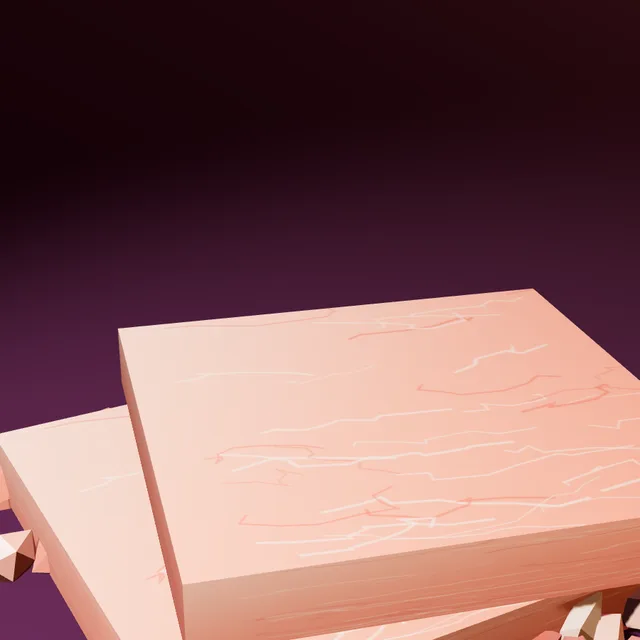
A salt block is a slab of solid rock salt, cut and polished flat. Heated slowly, it becomes a cooking stone that sears thin food and seasons it at the same time. Chilled, it's a cold serving plate for fruit, cheese or raw fish. It is one of the most fun things you can do with pink salt, and one of the easiest to get wrong the first time.
The main rule is simple. Go slowly. Almost every cracked block we hear about was heated too fast, or heated while still damp.
Choosing a block
For cooking, thicker is better. A block about 4–5 cm thick holds heat well and is far less likely to crack than a thin one. Thin slabs, around 2–3 cm, are best kept for cold serving.
Look for an even thickness and a flat base so the block sits steadily on the burner or grill. Some veining, cloudy patches and colour bands are natural. Deep cracks you can catch a fingernail in are not a good sign. If you want to know more about how slabs are cut from the rock, our piece on the Khewra mine explains where they come from.
Tempering a new block
Salt pulls moisture out of the air. A block that has been sitting in a humid kitchen, or shipped in a damp container, can hold water in tiny pockets. When you heat it, that water turns to steam and can split the block.
So before the first cook, leave it somewhere warm and dry for a day. Then do a slow trial heat with nothing on it, the way you would season a new pan. Don't be alarmed if it changes colour or develops fine lines. That's the salt reacting to heat and is part of its character.
Heating it up, step by step
On a gas hob or gas grill:
- Put the cold, dry block on the burner and turn the flame to low. Leave it for 15 minutes.
- Turn the flame to medium. Another 15 minutes.
- Turn it to medium-high. Another 10–15 minutes.
On an electric or ceramic hob: don't set the block straight on the element. Use a metal ring or a wok ring to keep a small gap between the block and the surface, then heat in the same stages.
In the oven: put the block in a cold oven, set it to about 200 °C (400 °F), and let it come up with the oven over 45 minutes or so. Then you can move it to the table on a trivet to cook in front of your guests. Use thick, dry oven gloves; it will be very hot.
On a charcoal grill: place the block on the grate before you light the coals, or at the cooler edge of the grill, and move it toward the heat gradually.
To check it's ready, flick a few drops of water on the surface. If they sizzle and disappear almost at once, you're there. If you own an infrared thermometer, aim for about 230–260 °C (450–500 °F).
What to cook on it
Think thin and fast. The block seasons food as it cooks, so anything that sits on it for a long time will get too salty.
- Prawns and scallops. Pat them dry. One to two minutes a side.
- Thin steak or lamb. Slice it no more than 1 cm thick. A minute or so a side for rare to medium.
- Chicken. Use thin strips or pounded breast, and cook it right through. The USDA safe minimum temperature for poultry is 74 °C (165 °F).
- Vegetables. Sliced courgette, asparagus, mushrooms and peppers do well.
- Eggs. Brush the surface with a little oil first. A fried egg on a salt block is one of life's quiet pleasures.
- Fruit. Thick slices of pineapple or peach caramelise beautifully.
You don't need to salt the food. Do pat it dry; wet food dissolves the surface faster and turns too salty. A very light brush of oil on the block helps with eggs and delicate fish.
Using it cold
Put a clean, dry block in the fridge for a couple of hours, or in the freezer for about 30 minutes. It makes a good serving plate for slices of mango, melon, mozzarella, cured meats or sashimi. The food picks up a gentle saltiness where it touches the block.
Keep very wet foods off it, or serve them on a leaf. Don't leave food sitting on a cold block for more than about half an hour, both for the saltiness and for food safety.
Cleaning and storing
Let the block cool completely, which can take a couple of hours. Never put cold water on a hot block.
Once it's cool, wipe it with a damp sponge or cloth, scraping off any stuck food with a spatula or a soft brush. Use as little water as you can. Pat it dry and leave it to air dry fully before you put it away. No soap, no soaking, no dishwasher.
Store it somewhere dry. Wrapped in a cloth in a cupboard is fine; above a kettle or next to the sink is not. After raw meat or fish, clean it as carefully as you would a chopping board.
When it starts to show its age
Every block thins a little with each use, and most develop cracks after enough cooking. A crack doesn't make it unsafe. If it splits into two pieces, use them as smaller serving plates. When a block gets too thin to trust with heat, break it up and grate it over food as a finishing salt, or keep it for chilled serving.
Common mistakes
- Heating too fast. The number one cause of cracked blocks.
- Heating it damp. Always let it dry thoroughly after washing.
- Cooking thick food. A whole chicken breast or a thick steak will be salty on the outside long before it's cooked inside. Slice it first.
- Pouring marinade on. Liquid dissolves the surface and splashes brine. Drain food well.
- Plunging it into water. Thermal shock can split even a thick block.
A salt block will never be as practical as a cast-iron pan. That isn't the point. It is a good-looking piece of the Salt Range on your table, and a fun way to cook for friends. For everyday seasoning away from the block, our guide to coarse, fine and extra fine grades will help, and see the slab guidance on The Salt page for more on our cooking slabs.